

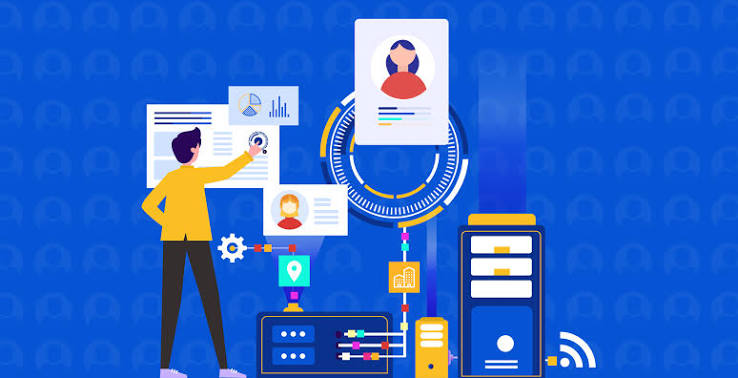
Across the world, banks are discovering that their digital channels are more than just service touchpoints—they are powerful sensors of economic reality. Every login, chatbot query, and loan simulation leaves a digital footprint that, when aggregated responsibly, can help banks anticipate shifts in household and business finances long before they show up in official statistics.
For institutions operating in fast-moving markets, this turns customer data into an economic “crystal ball,” enabling better risk management, sharper decision-making, and more resilient balance sheets. At Iremak Global, we see this as a defining capability for modern banks and the governments that regulate them: using operational data to read the economy in real time.
From Digital Channels To Economic Signals
When banks first moved online in the 1990s, the goal was convenience—basic web portals to check balances and pay bills. Today’s reality is very different: customer-facing platforms now include rich dashboards, self-service loan tools, chatbots, and integrated payment journeys that capture detailed behavioral data.
Research led by Harvard Business School’s Jung Koo Kang shows that banks that systematically track and share this customer data beyond the marketing department are better at navigating economic cycles. These banks adjust their loan loss provisions faster and maintain fewer non‑performing loans during periods of stress because they can detect early signs of deterioration in their customers’ financial health.
Why Macroeconomic Awareness Starts With Customers
Macroeconomic indicators—growth, employment, inflation—are critical for bank strategy, but they are often delayed and aggregated. Customer interactions, on the other hand, are high-frequency and deeply local: a spike in declined payments, late bill settlements, or increased queries about restructuring can all signal economic pressure.
Kang’s work finds that banks with stronger customer-facing technology talk more about macroeconomic conditions in their regulatory filings, suggesting they have a richer, data-driven understanding of local trends and risks. In practice, this means they can identify pockets of distress earlier, calibrate their risk models, and respond with targeted support instead of broad, reactive measures.
Data As A Strategic Asset, Not Just A Marketing Tool
Many banks still treat web analytics, chatbot logs, and clickstream data as marketing assets—useful for campaigns but disconnected from core risk and finance functions. The evidence suggests this is a missed opportunity.
Banks that integrate customer data into credit risk, treasury, and financial reporting processes are able to transform everyday operational information into macroeconomic insight. This requires viewing data as multipurpose: the same interaction that informs a product offer can also enrich stress-testing scenarios or early warning systems for loan portfolios.
What Really Matters: Collection Over Cosmetics
A polished website or mobile app alone does not translate into better forecasting. The real differentiator is whether the platform consistently captures signals that matter for financial resilience—such as indicators of distress, borrowing intent, and regional variations in service demand.
Technologies that track patterns of missed payments, changes in transaction behavior, or shifts in demand for credit can be aggregated into meaningful proxies for local economic activity. Combined with external macro data, these signals help banks build richer, more timely views of the economies they serve
Scale, Engagement, And The Power Of Behavior
Larger banks with deep retail franchises naturally see more data flow through their systems, but scale alone is not enough. The key is engagement: institutions whose customers actively use digital tools to manage their finances generate richer behavioral datasets than those whose channels are underused.
These behavioral patterns—how often customers log in, which tools they use, how they respond to pricing or policy changes—directly enhance banks’ ability to forecast macroeconomic trends and credit risk. This is particularly important in volatile regions, where traditional borrower information may not fully capture rapid changes in economic conditions.
Talent And Organization: Turning Data Into Insight
Technology alone does not produce insight; people and structures do. Banks that employ more data-focused professionals—analysts, data scientists, and managers who understand both statistics and strategy—are better at translating customer data into accurate loan-loss forecasts and actionable decisions.
Kang’s research underscores the importance of organizational design: data has to move across silos. When marketing, credit risk, finance, and strategy teams all work off shared data and shared interpretations, banks can create a feedback loop between customer interactions and institutional decision-making.
What This Means For Banks And Regulators In Emerging Markets
For banks in emerging markets—and for the regulators and treasury agencies that oversee them—the implications are significant. Digital banking is expanding rapidly, and with it comes a unique opportunity to build real-time economic sensing capabilities on top of payment and customer interaction data.documents1.
Used responsibly and in line with evolving privacy frameworks, these capabilities can help institutions:
- Detect regional pockets of stress earlier and design targeted interventions.
- Enhance credit risk models for households and MSMEs in informal and semi‑formal sectors.
- Support evidence-based policy decisions, such as local stimulus, relief programs, or regulatory adjustments.
This convergence of digital infrastructure, data, and analytics is reshaping how financial sectors can support inclusive growth.
How Iremak Global Supports Data-Driven Banking
At Iremak Global, we help banks and public-sector partners design and implement the systems and governance needed to unlock this potential. That includes:
- Architecting customer-facing platforms and analytics pipelines that turn raw interaction data into risk and macro insights.
- Designing data governance frameworks that align innovation with privacy, ethical use, and regulatory expectations.
- Building cross-functional operating models so that marketing, credit, treasury, and finance all benefit from the same unified data view.
By treating digital channels as economic sensors—rather than just service layers—banks can move from reactive to anticipatory, strengthening both their own resilience and the stability of the economies they serve.